Lovikka
LOVIKKA
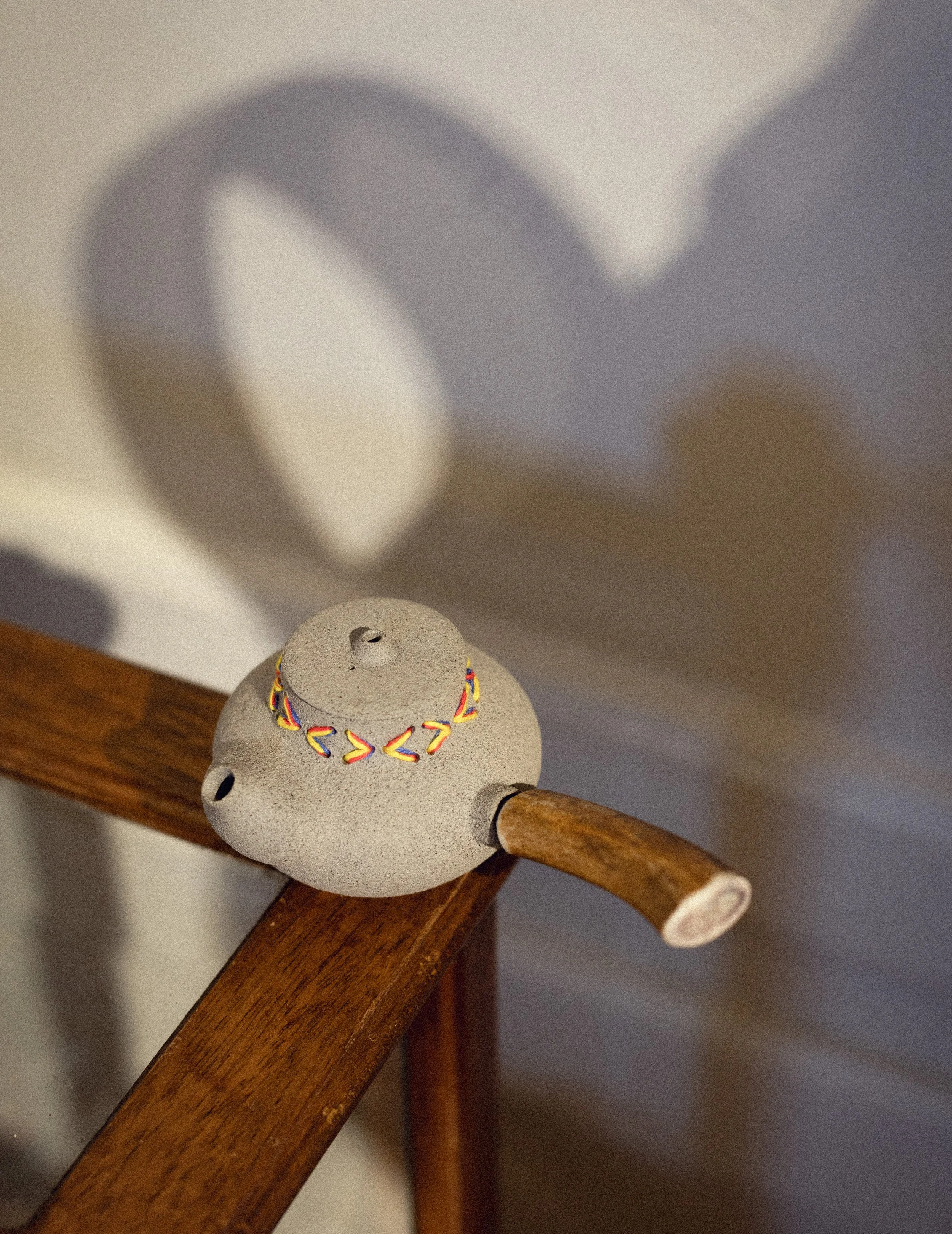
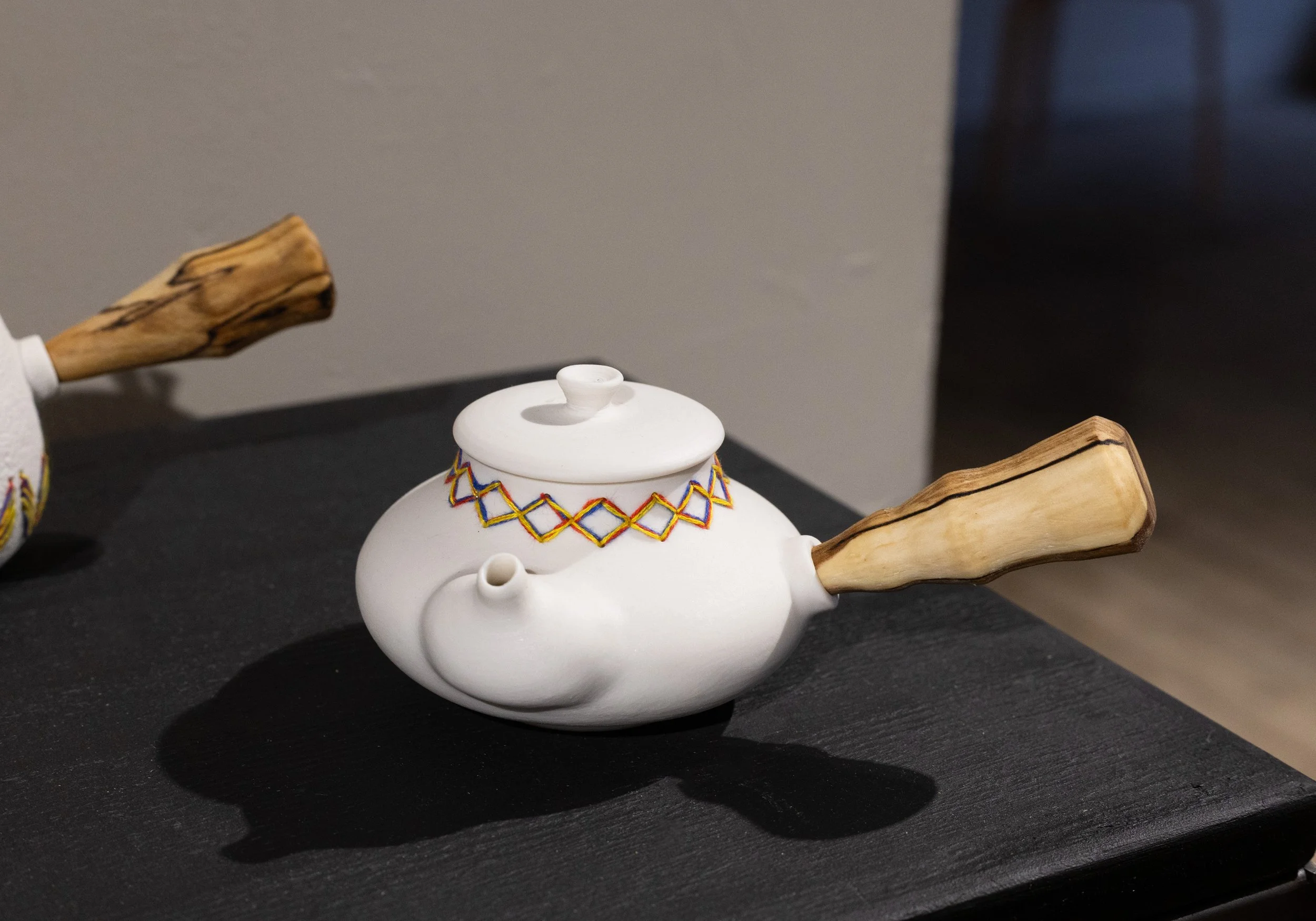
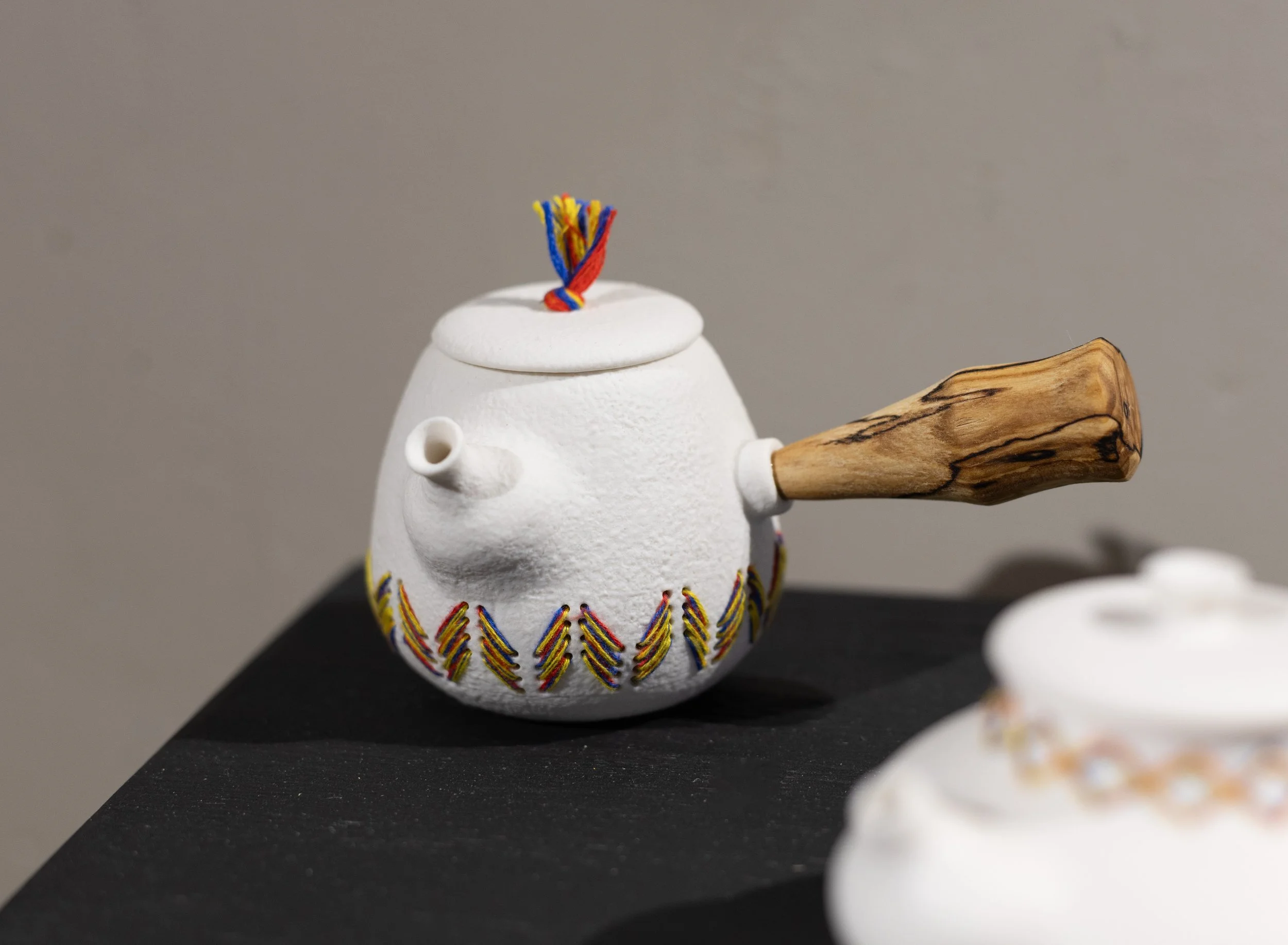
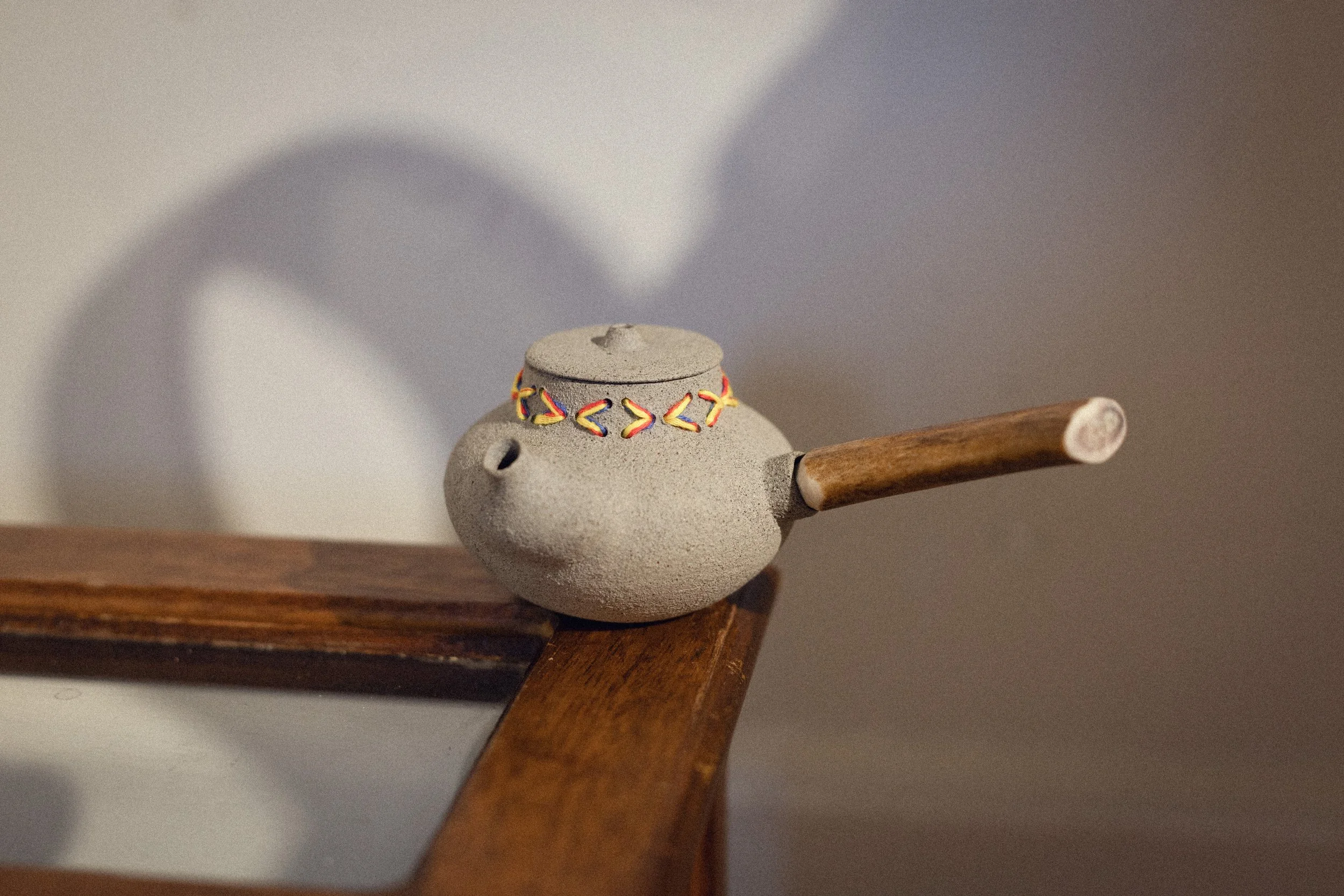
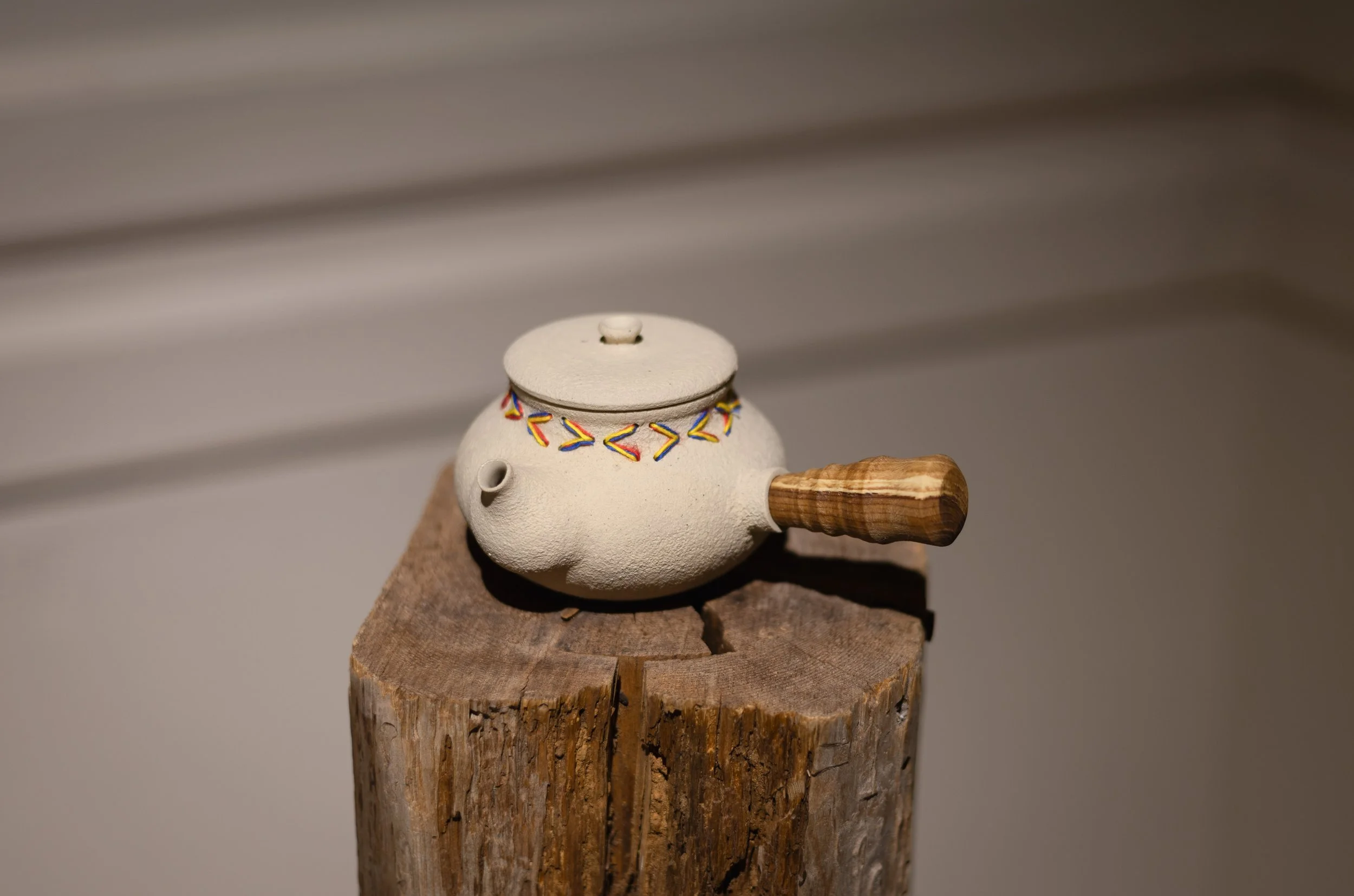
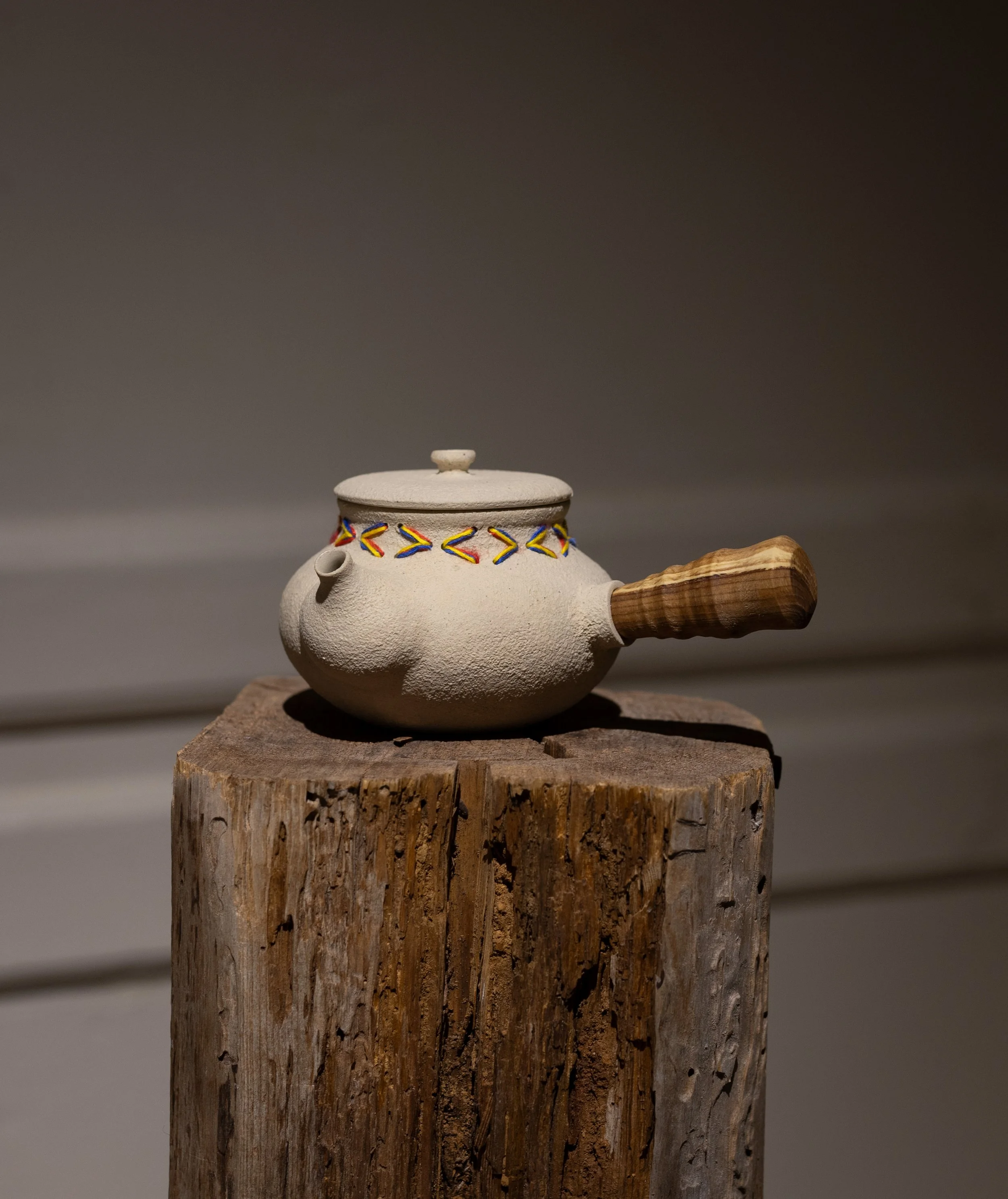
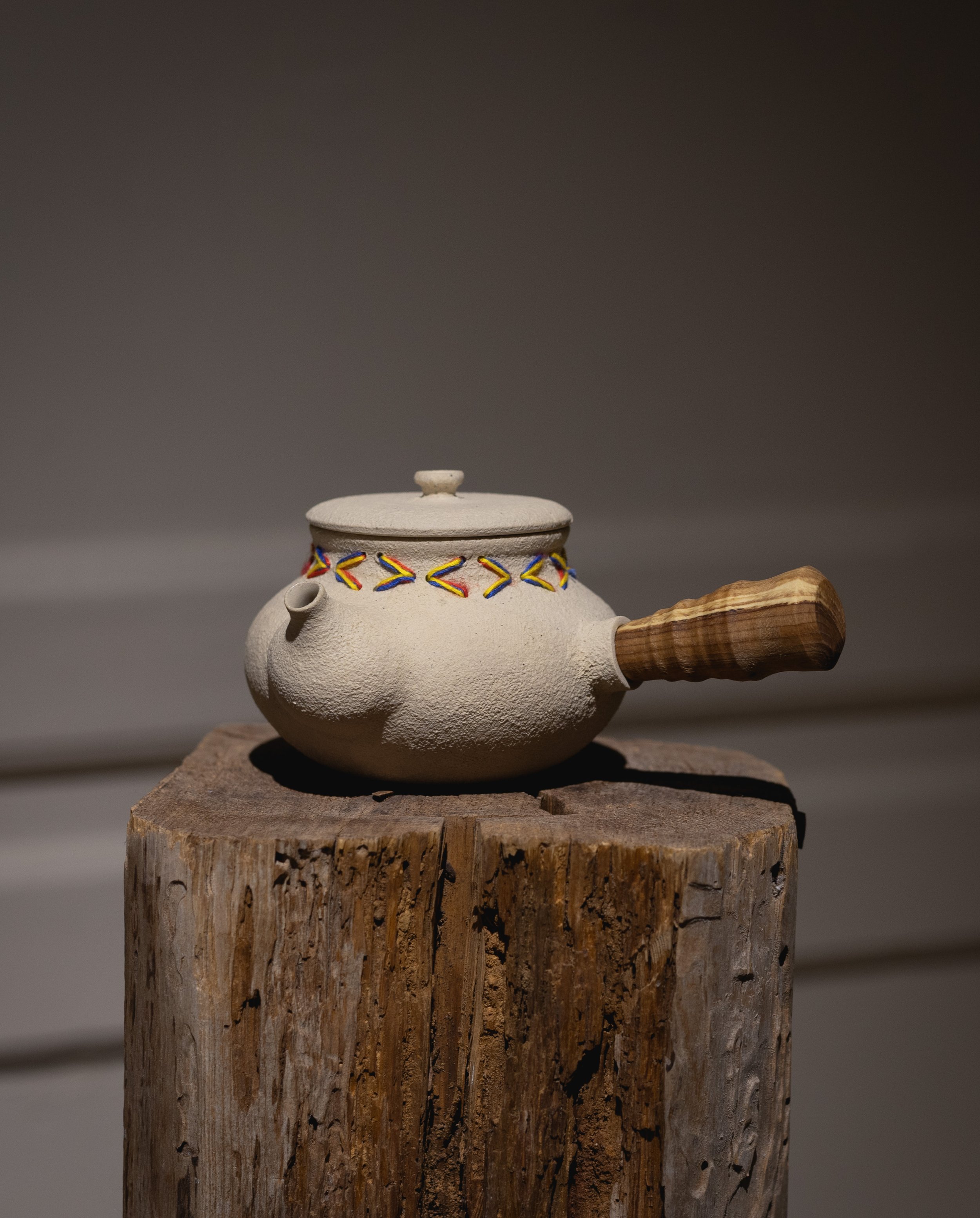
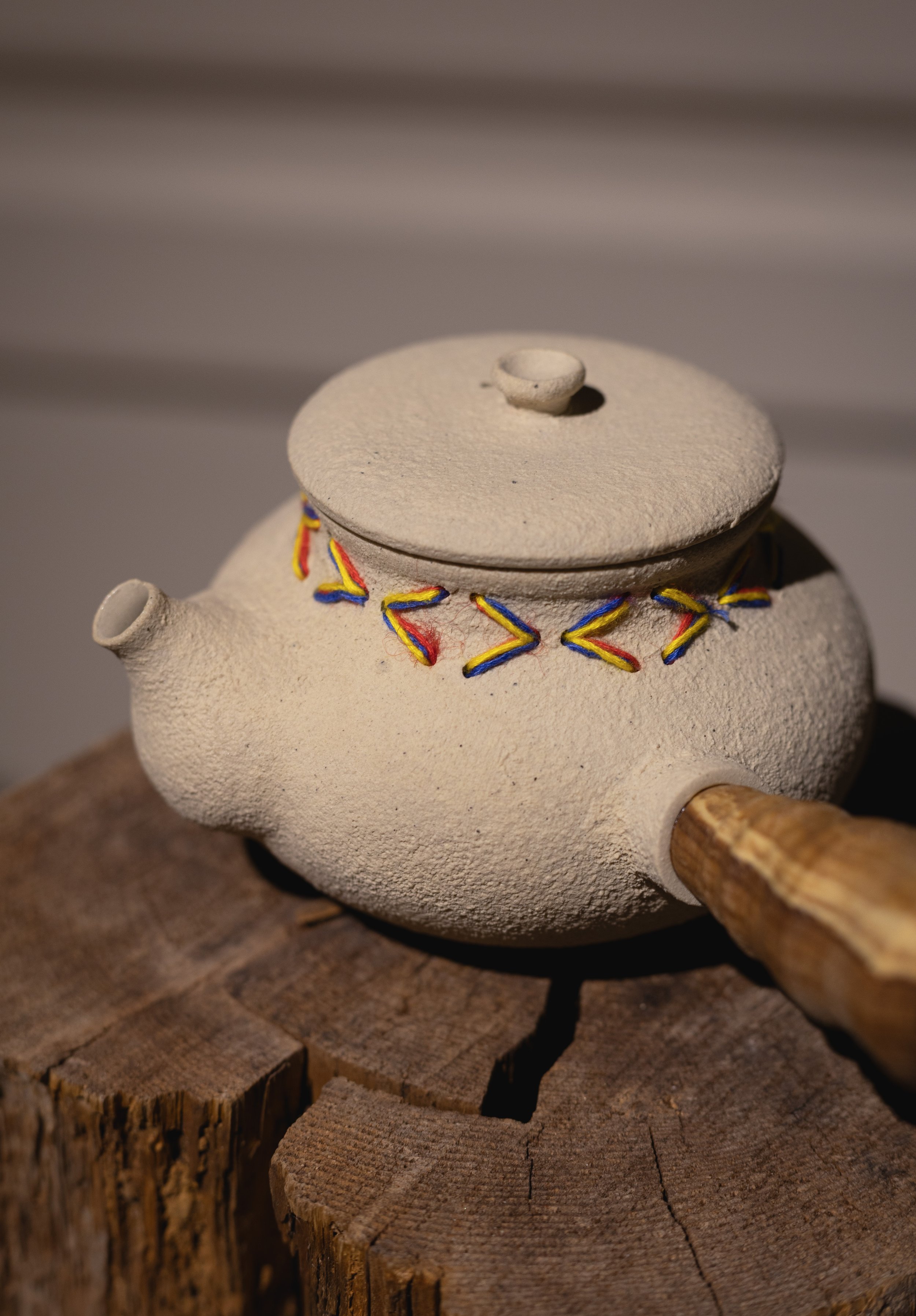
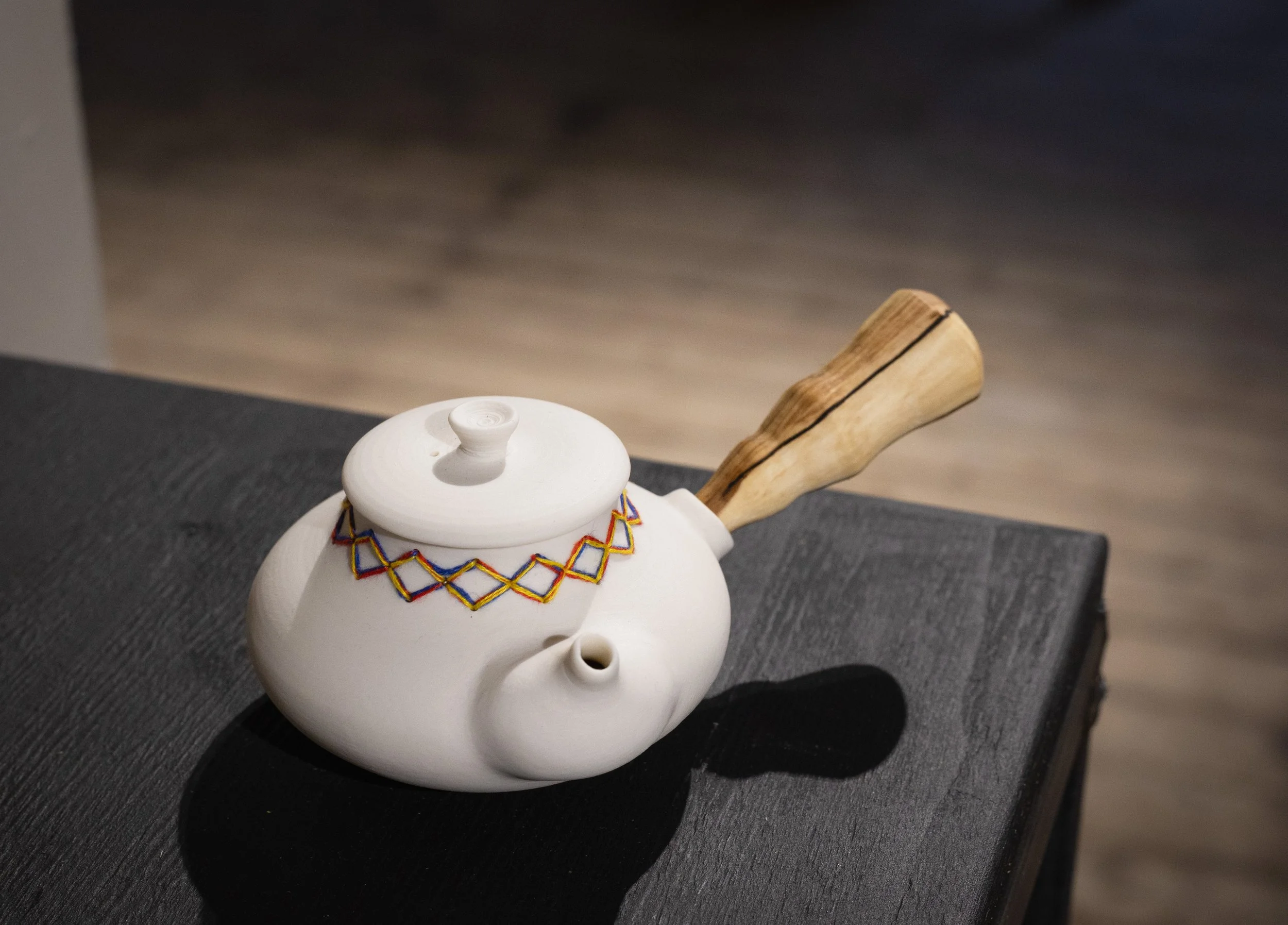
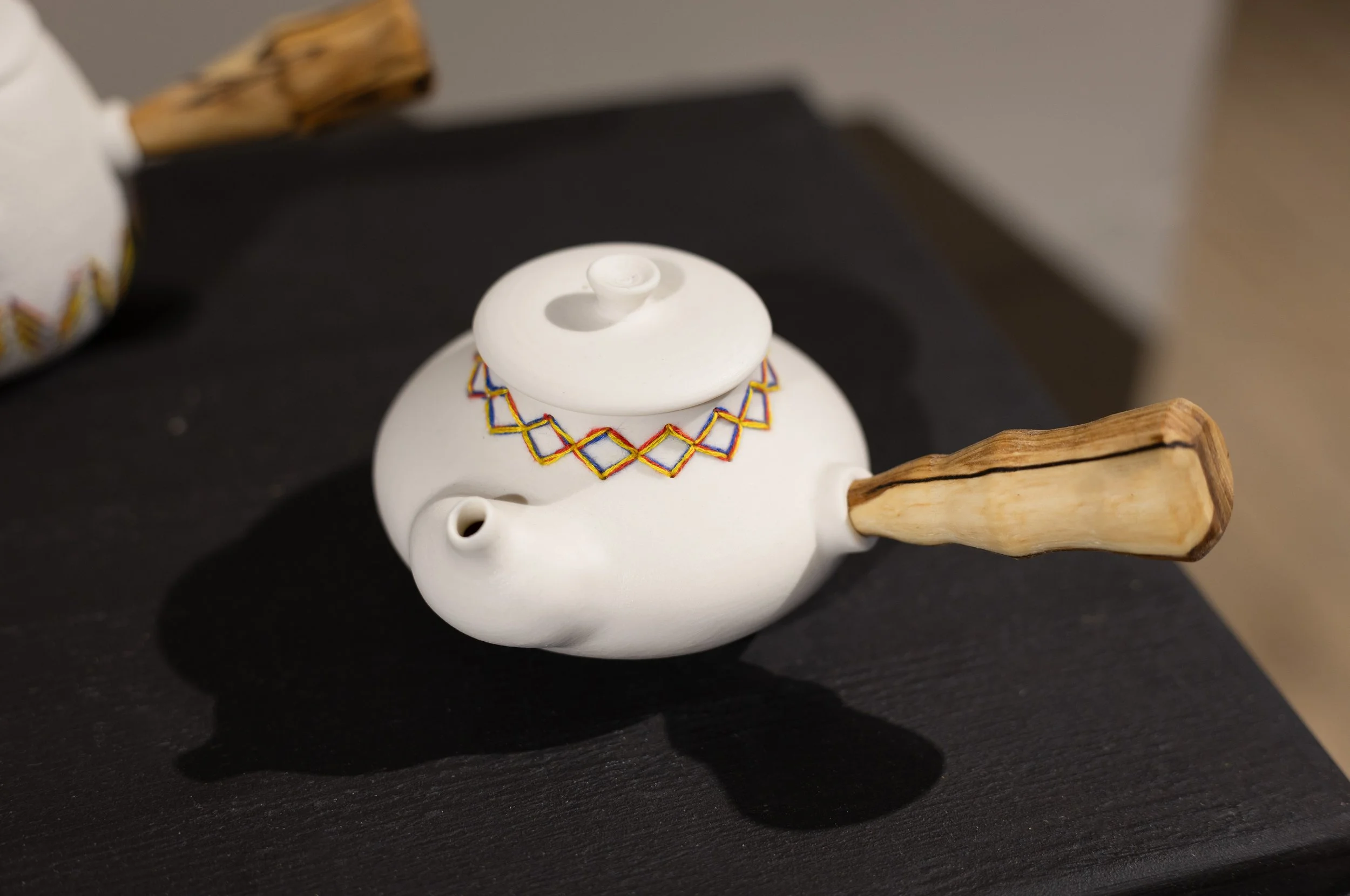
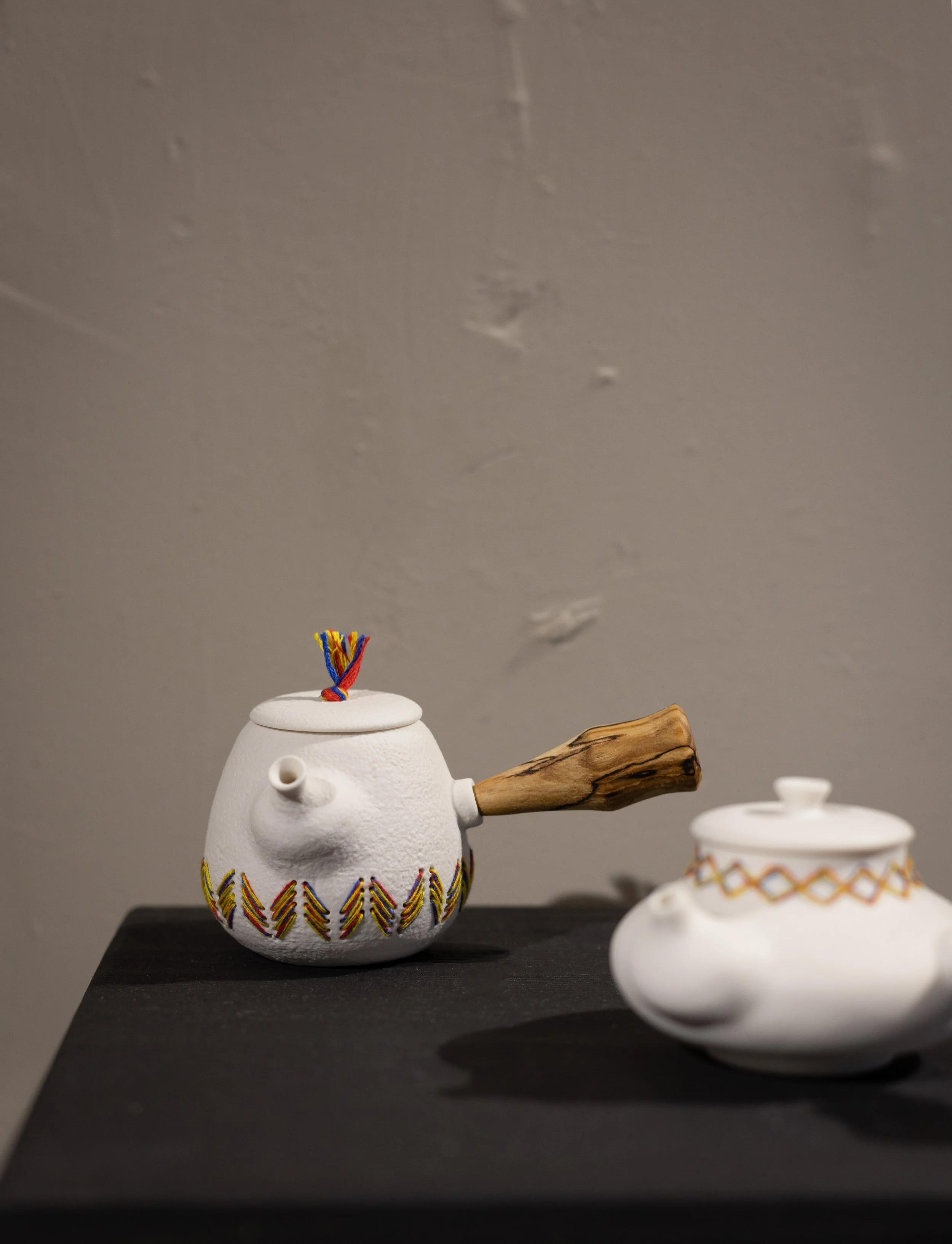
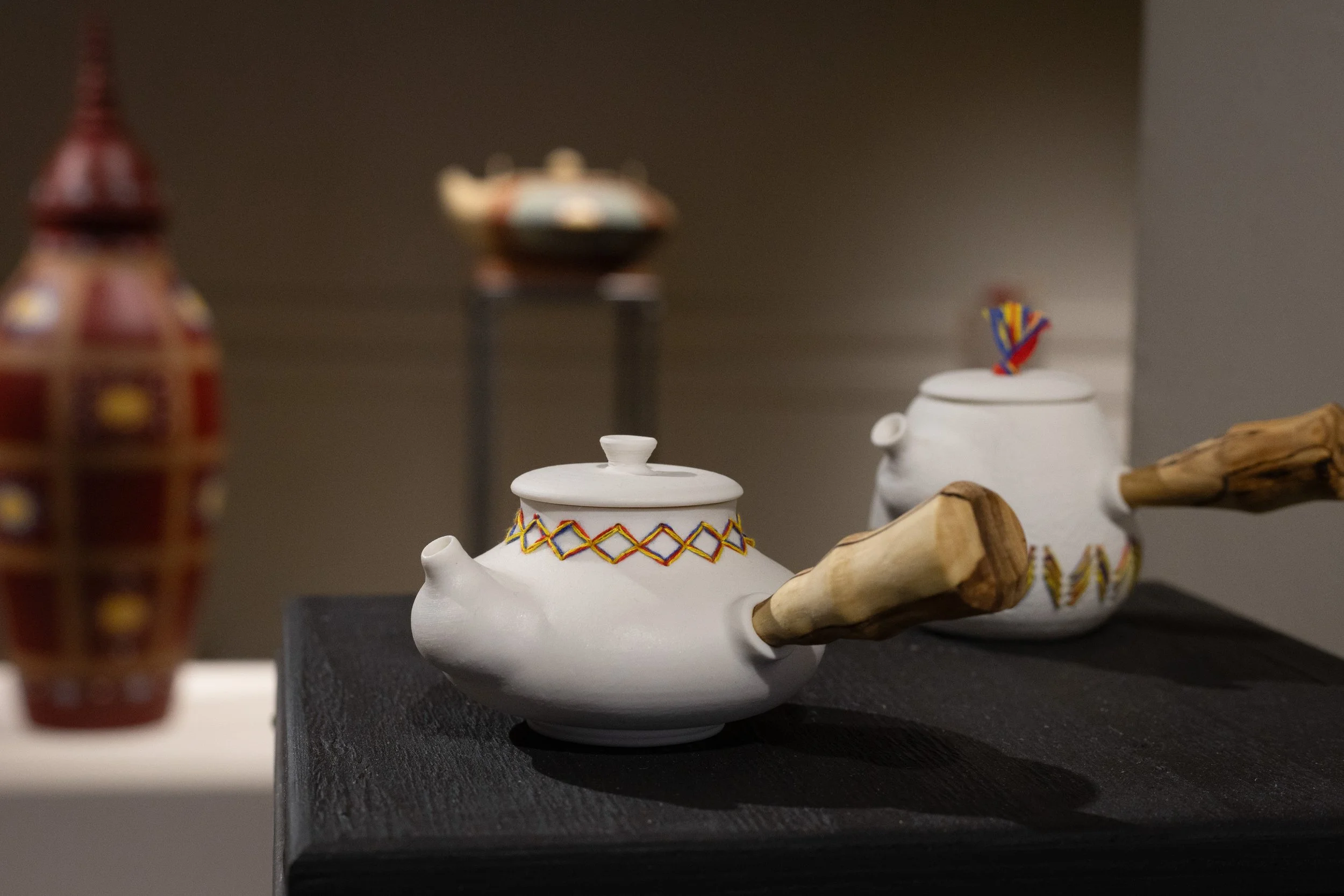
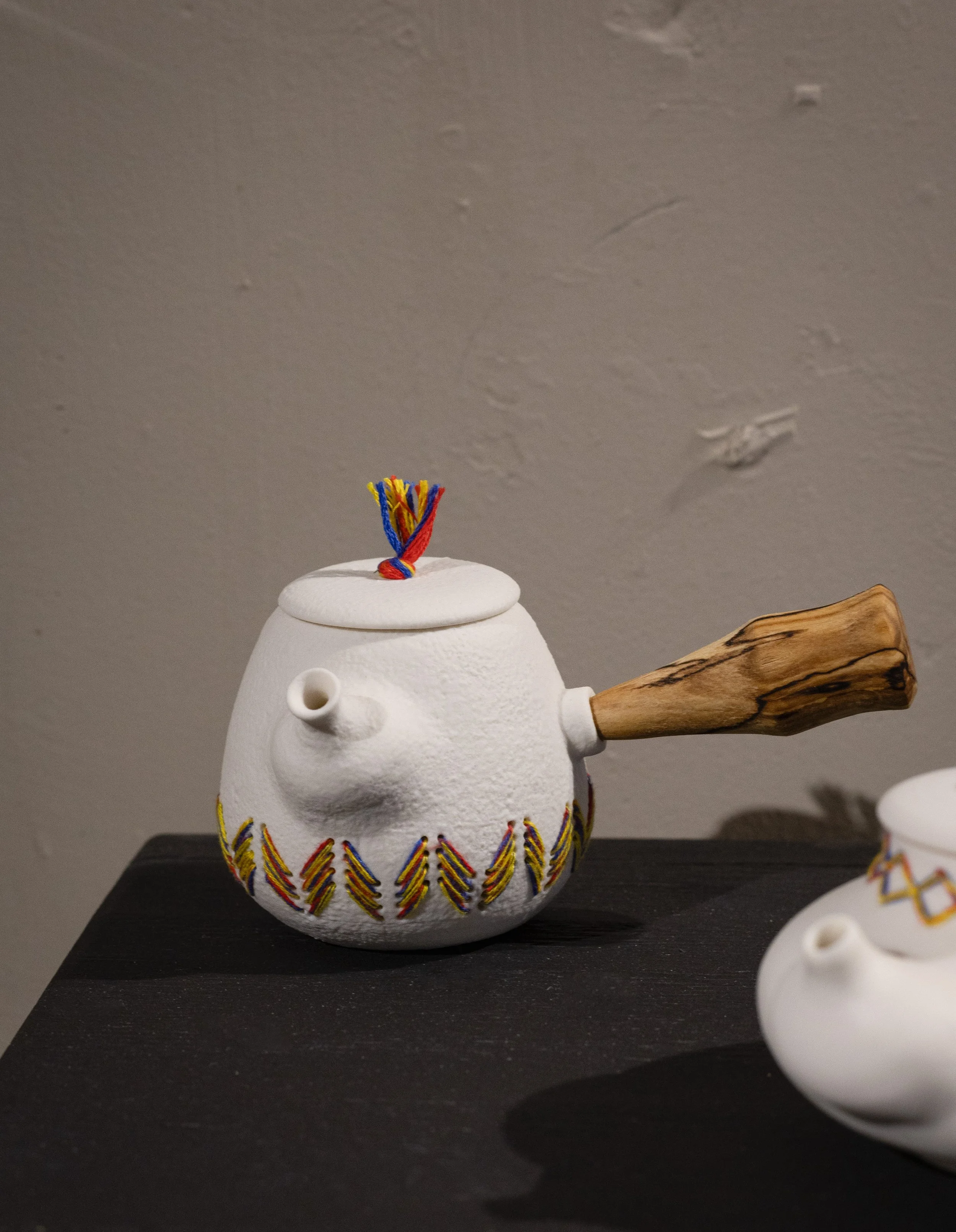
These small teapot sculptures are inspired by the iconic Lovikka mitten — a craft tradition deeply rooted in the village of Lovikka in Torne Valley. The choice of materials reflects the colors, soft textures, and decorative embroidery that have become characteristic of the Lovikka mitten. Traditional decorative patterns found in the mitten-making tradition — such as the cross motif, spruce-needle inspired embroidery, and the square pattern — are transformed into sculptural forms and surfaces, connecting contemporary art with vernacular craft traditions.
The wooden handles are made from trees that grew at my grandmother’s family home in Ohtanajärvi, allowing the sculptures to carry a physical connection to the landscape, memory, and spirit of the Torne Valley itself.
To recreate the traditional stitched patterns, the sculptures required careful planning during the ceramic process. Tiny perforations had to be precisely positioned so that the embroidery could later be sewn into the hard ceramic surface. This meticulous process mirrors the precision, patience, and craftsmanship found in the making of the traditional Lovikka mitten.
Further below follows a short introduction to the history and cultural tradition behind the Lovikka mitten.
A visit in Lovikka
During my journey through the Torne Valley in northern Sweden, I visited the small village of Lovikka, the birthplace of the iconic Lovikka mitten. The visit became the starting point for an artistic exploration of craft, tradition, labor, and cultural identity.
I was introduced to the history of the Lovikka mitten through a private tour led by Johanna Hjärtström, one of the few people today authorized to knit and sell the traditional Lovikka mitten bearing the official seal “Äkta Lovikkavante” (“Authentic Lovikka Mitten”). I was able to see original mittens created by Erika Aittamaa, the inventor of the Lovikka mitten, and learn about the strict criteria that govern its production: from origin requirements and membership in the Lovikka Housewives’ Association to techniques such as spinning one’s own yarn, tight knitting, hand-washing the mittens in hot water, and carding the wool.
Through her stories and demonstrations, the mitten revealed itself not only as a practical garment, but as a living cultural heritage shaped by generations of knowledge and care.
The mittens are decorated with wool embroidery in optional colors, often yellow, blue, red, and green, stitched into distinctive traditional patterns such as the square (ruutu), spruce needle (kuusenhako), and cross (risti). Finally, the label “Äkta Lovikkavante” is attached, guaranteeing both the quality of the mitten and the continuation of Erika’s traditional craftsmanship.
The history of the Lovikka mitten is closely tied to the local Housewives’ Association, which established a patent seal to protect the authenticity and quality of the craft. This seal became an important symbol of collective labor, regional identity, and the preservation of traditional knowledge.
The original Lovikka mitten was created in the late 19th century by Erika Aittamaa in the village of Lovikka. After knitting a pair of unusually thick wool mittens that were initially criticized for being too coarse, she brushed and softened the wool, creating the characteristic warm and durable mitten that would later become internationally recognized.