Kaffepannan
Kahvipannu
Kaffepannan - Kahvipannu
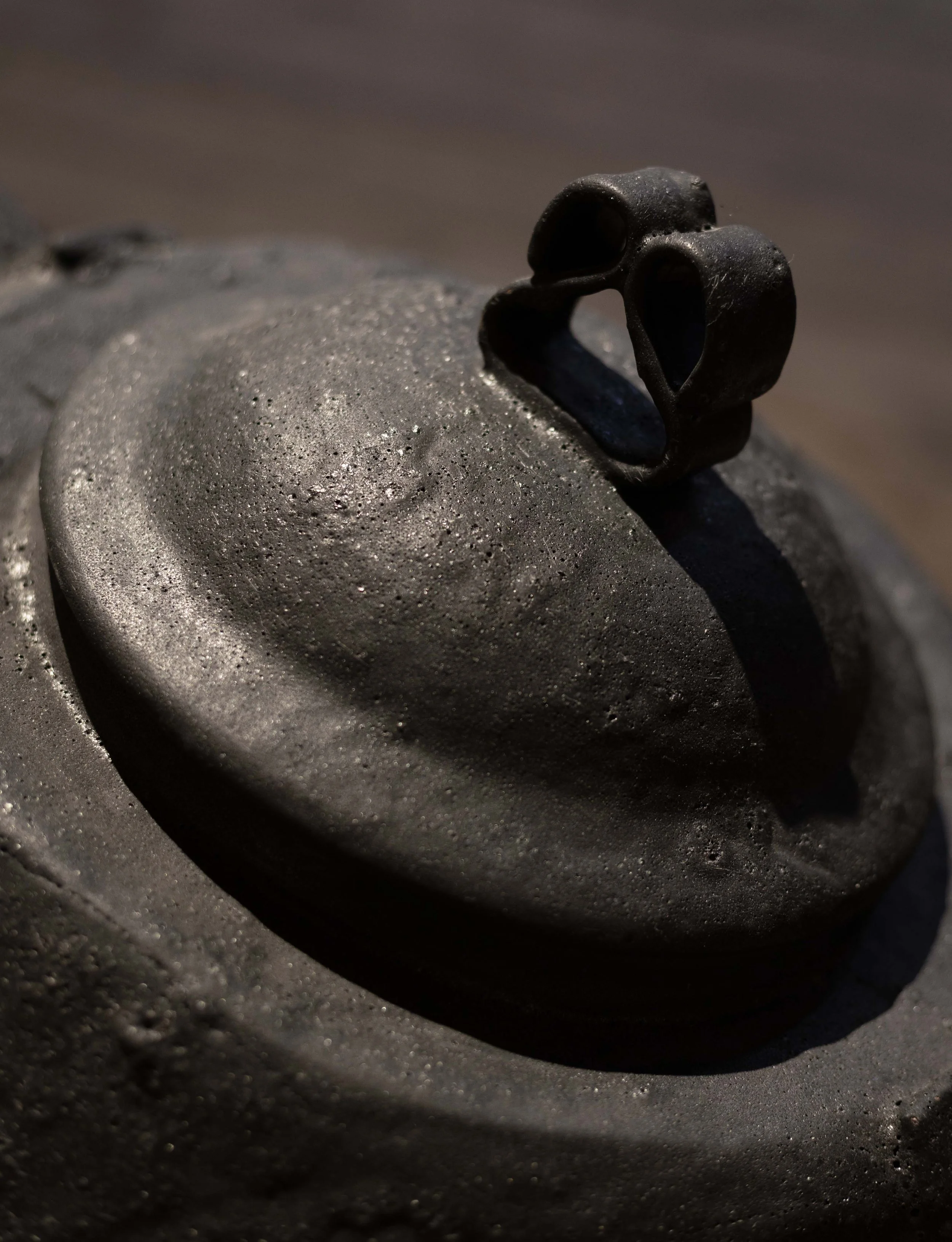
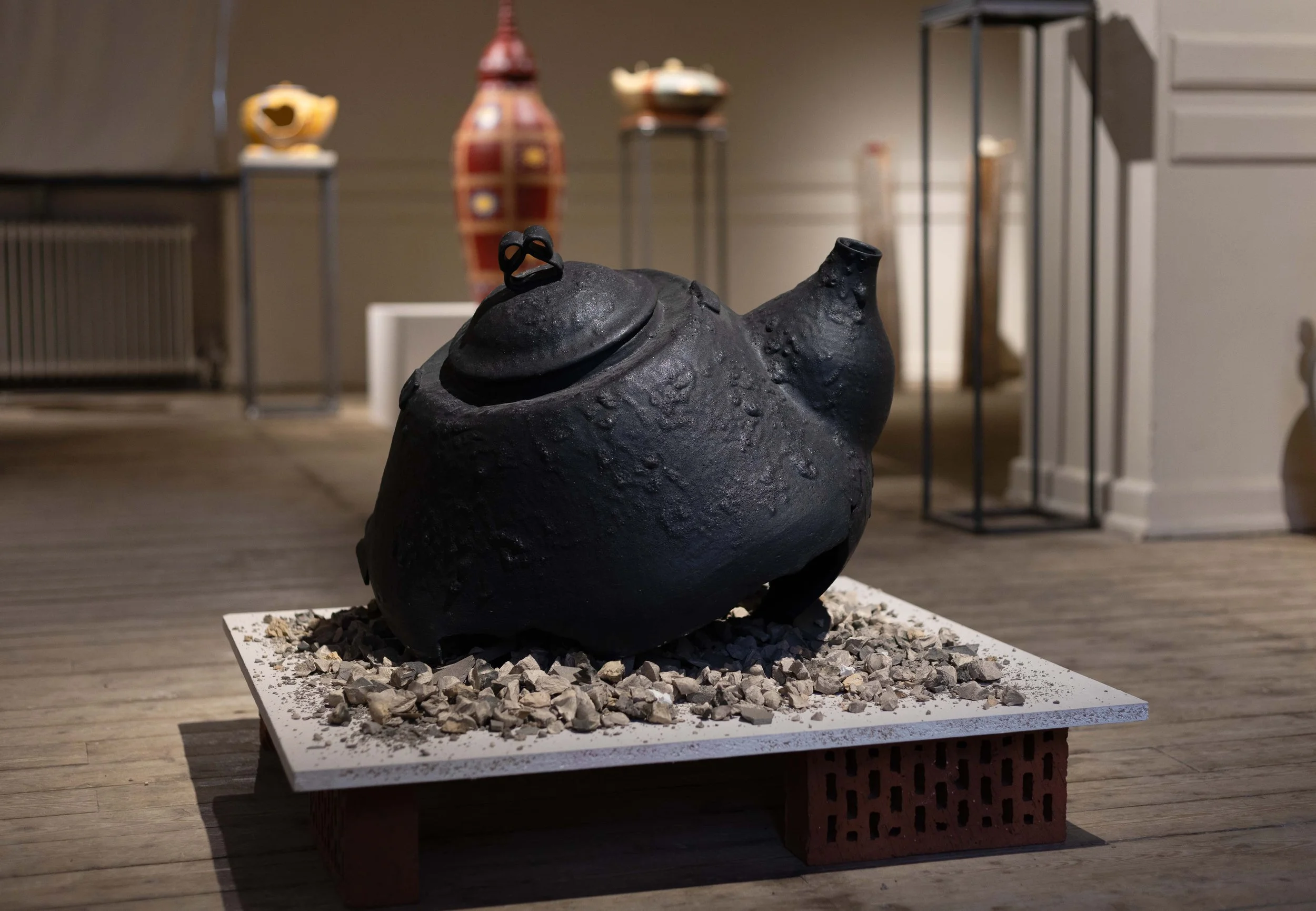
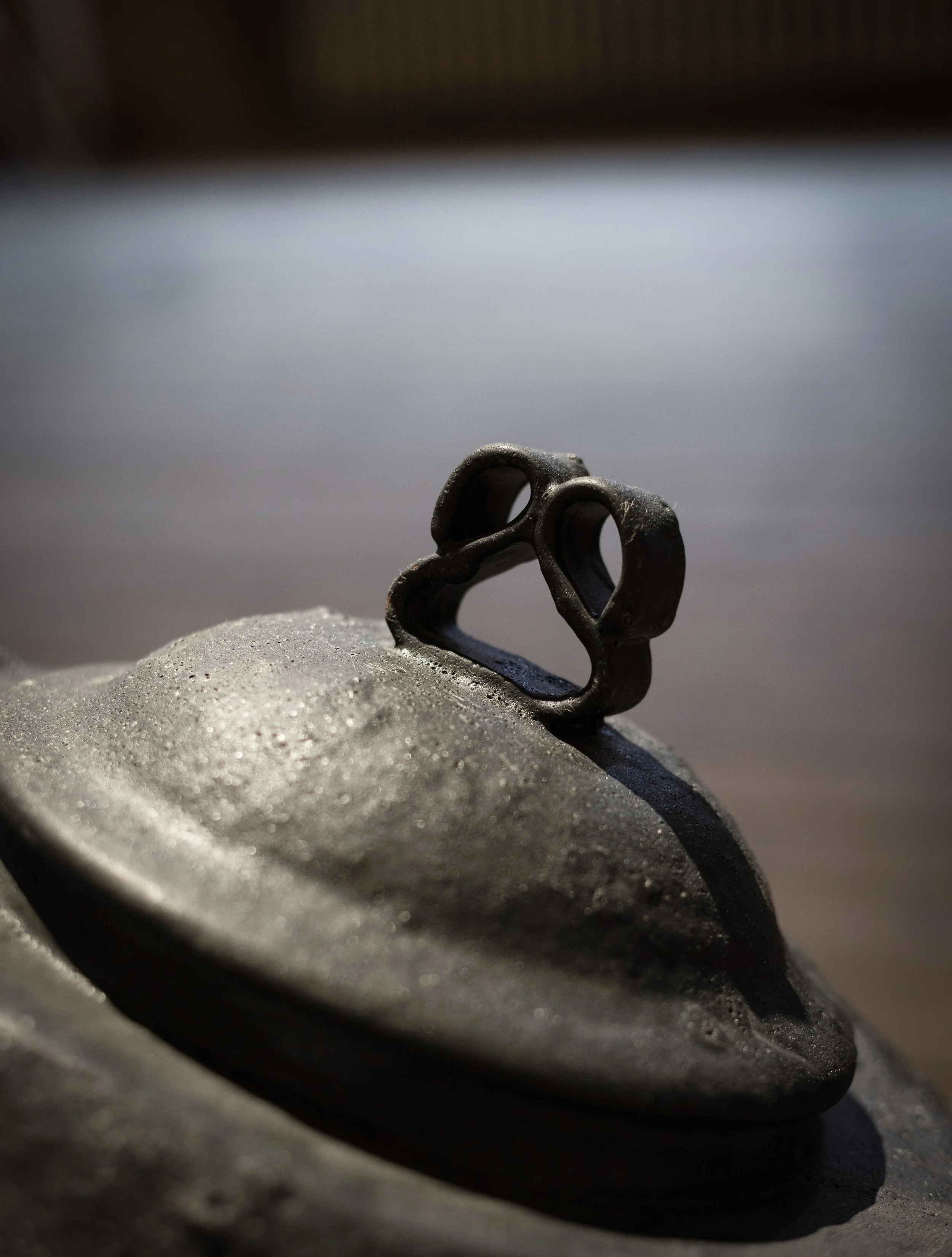
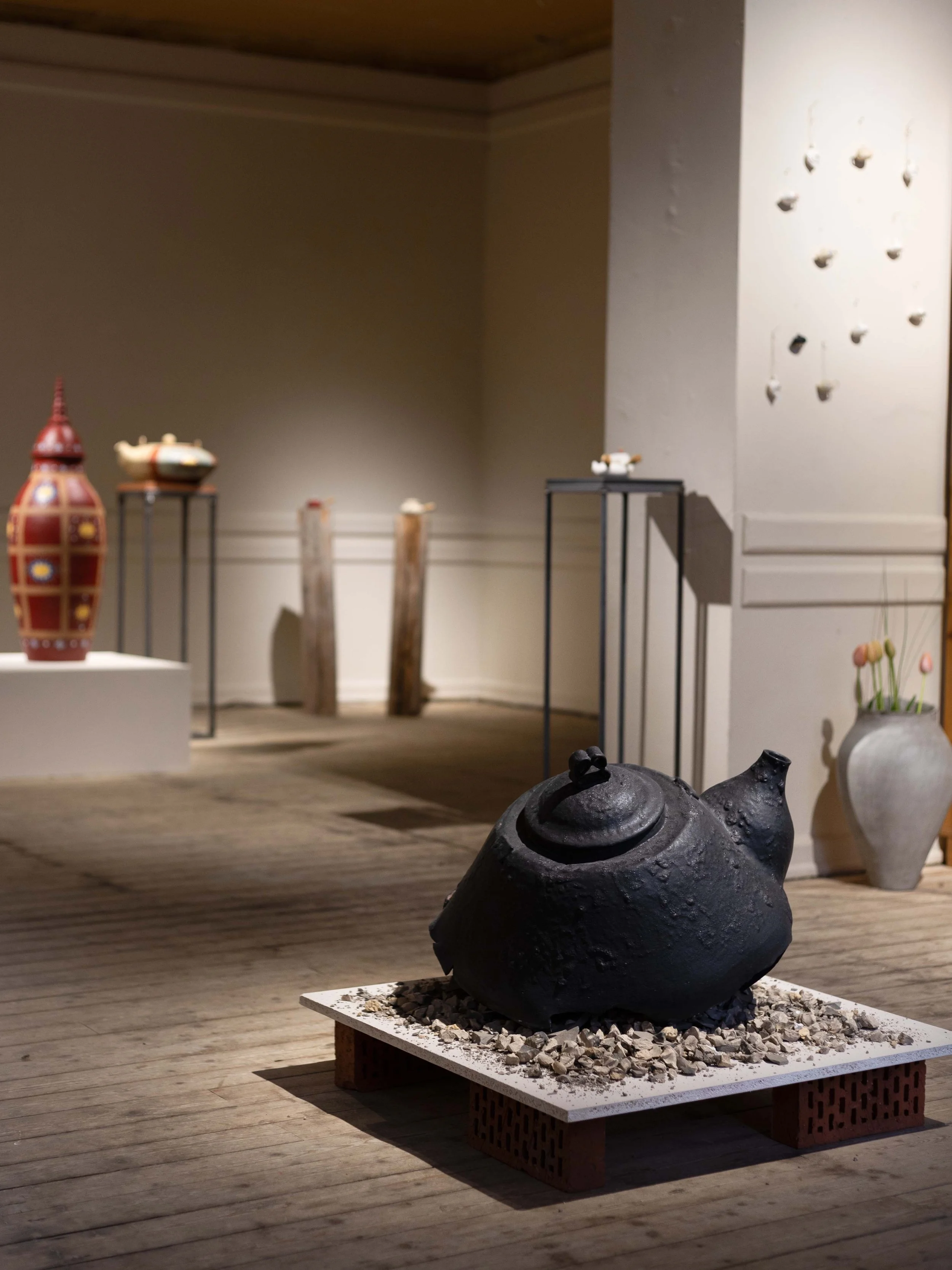
This sculpture takes the form of a traditional coffee pot — a kahvipannu, as it is called in Meänkieli. Once a common way of brewing coffee, these pots have become increasingly rare in contemporary coffee culture. In the Torne Valley, however, I encountered them repeatedly, often made from cast iron or copper and distinguished by the characteristic knob on the lid. They are still carried on journeys into nature, where coffee is boiled over open fires, continuing a tradition deeply connected to everyday life and the landscape.
This sculpture is made from recycled stoneware clay and finished with a black crater glaze that evokes the surface of aged cast-iron pots. The material and glaze were chosen to create a sense of wear, use, and history embedded within the object.
Through craft, time becomes visible. Materials age, surfaces change, and the traces left behind hold stories. What was once new gradually becomes something else—heritage, memory, testimony. Here, change and continuity meet. Here, the coffeepot becomes a link between past and present, filled, emptied, and filled again. This ruin-like sculpture embodies what once was, memories and stories of the past, things that’s been lost but resurfaced, evoking the transience of life. It reflects on how traditions, knowledge, and ways of living are passed down, altered, and sometimes lost between generations.
Process
In my process, sculptures that ultimately appear fragmented or ruin-like are always first created as complete forms. I begin by shaping and finishing the object in its entirety, allowing it to exist temporarily as whole and intact. Only once I am satisfied with the form do I begin the process of dismantling it.
The act of breaking becomes a way of shaping the final expression of the work. Depending on the aesthetic and emotional quality I want to achieve, I tear the sculpture apart at different stages of the ceramic process — while the clay is leather-hard, after bisque firing, or after the final high firing. Each stage produces different kinds of fractures, textures, and traces of force, creating varying impressions of fragility, erosion, and time.